


Drive through Los Angeles and you’ll see tile roofs everywhere, from Spanish Revival homes to newer builds trying to get that same warm, textured look. For a lot of homeowners, the hard part is not deciding whether they like tile. It’s choosing between concrete and clay.
Both materials can work well in Southern California. Both handle heat well, both offer strong fire resistance, and both can look great for decades. But they are not the same product, and the differences matter once you get into budget, structure, maintenance, and the specific look you want your house to have.
If you’re comparing a new roof, planning a replacement, or trying to understand the types of tile roofing material available for your home, here’s a clear side-by-side look at what makes sense in LA.
Why Tile Makes Sense In Los Angeles
Los Angeles is one of the best places in the country for tile roofing. We get a lot of sun, long dry stretches, occasional heavy rain, and wildfire risk in many areas. Tile performs well in that mix because it doesn’t rot, it stands up to UV exposure, and it’s noncombustible.
That does not mean every tile roof is automatically the right roof. The underlayment system, flashing details, ventilation, and the structure under the roof all matter. But as a category, tile is a proven fit for Southern California homes.
It also fits the local architecture. If you’re trying to preserve the character of a Mediterranean, Mission, Spanish, or even some ranch-style homes, tile usually looks more at home than many other roofing materials.
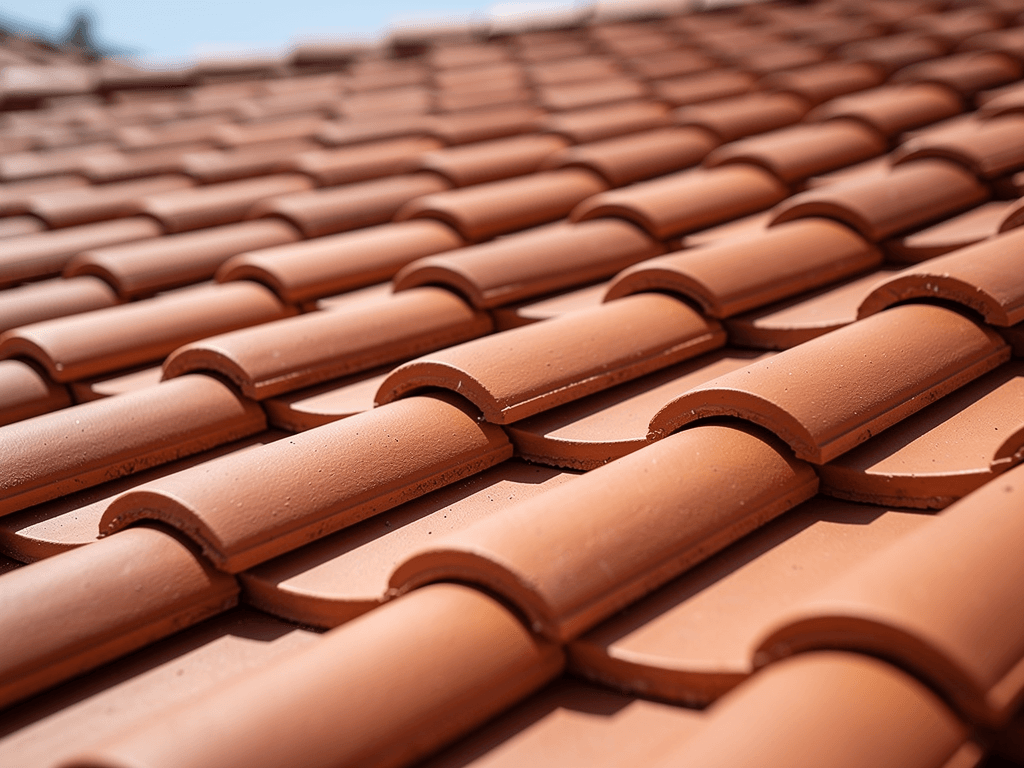
Concrete Vs. Clay At A Glance
| Category | Concrete Tile | Clay Tile |
|---|---|---|
| Upfront cost | Usually lower | Usually higher |
| Weight | Heavy | Heavy, sometimes lighter depending on profile |
| Lifespan | Long-lasting, often several decades | Very long-lasting, often longer than concrete |
| Color | Applied color or pigment can fade over time | Color is often more natural and stable |
| Appearance | Can mimic clay well, slightly more uniform | Classic, premium, more natural variation |
| Maintenance | Low, but cracked tiles and underlayment still need attention | Low, with similar repair needs over time |
| Best fit | Homeowners balancing look and budget | Homeowners prioritizing appearance, tradition, and longevity |
Cost: Where Most Homeowners Start
For most people, cost is the first real dividing line.
concrete roof tiles are usually the more budget-friendly option. The material itself tends to cost less than clay, and that can make a big difference on a full roof replacement. If you like the tile look but need to keep the project grounded in reality, concrete often lands in the sweet spot.
Clay tiles usually cost more up front. Part of that is the material, part of it is the manufacturing process, and part of it is the premium attached to a product that has a long track record and a distinct look. On some homes, that higher cost is worth it. On others, it pushes the project farther than the budget allows.
It’s also worth remembering that the roof system cost is bigger than the tile alone. Tear-off, deck repairs, underlayment, battens where needed, flashing, ridge details, permits, and labor all affect the final number. If you’re weighing the total cost of a tile roof, make sure you’re comparing complete systems, not just tile prices.
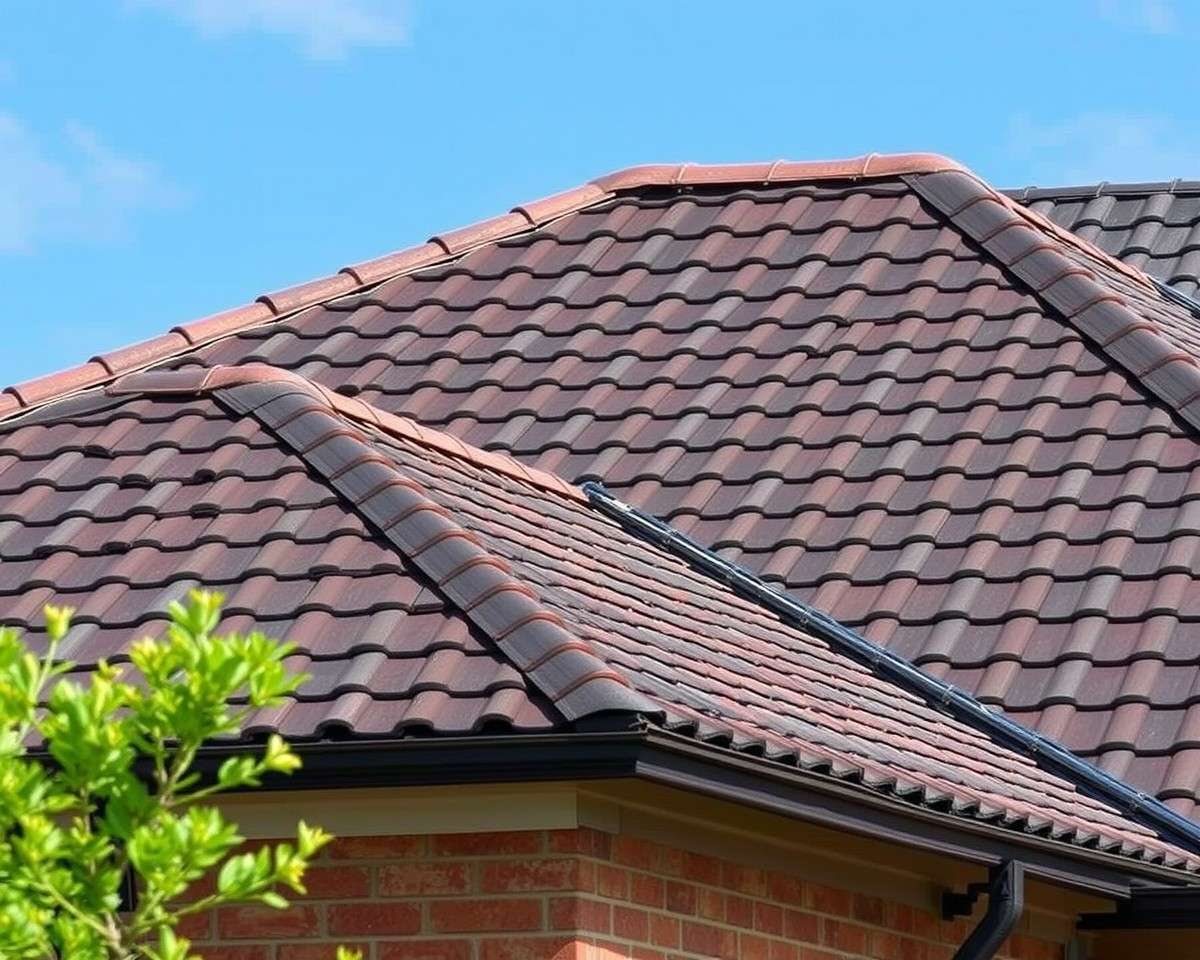
Weight And Structural Considerations
Both concrete and clay are heavy roofing materials. That’s one reason they hold up well in wind and weather, but it also means your home has to be able to support the load.
This matters most if you’re switching from asphalt shingles to tile. A house that has carried a lighter roof for decades may need structural review before a tile system goes on. Some homes are fine as-is. Others need reinforcement.
Concrete tile is often a little heavier than clay, though profiles vary and exact weights depend on the product. Either way, this is not a place to guess. If a contractor is talking about installing tile on an older home, ask whether the structure has been evaluated.
Homeowners who start by searching clay tile roof repair near me are often really dealing with a bigger question, especially on older houses: is the roof system sound, and was it built to carry the material properly? A cracked tile is one issue. Structural load is another.
Lifespan And Long-Term Value
Clay has the edge here. A well-installed clay roof can last a very long time, often long enough that the underlayment and flashings need replacement before many of the tiles do. That long service life is one reason clay has such a strong reputation.
Concrete also lasts a long time, and for many homeowners it lasts more than long enough to justify the investment. But over the years, concrete may show wear differently. Surface color can fade, and the material can become more porous with age depending on product quality and exposure.
What we see at the yard is that lifespan depends as much on installation and maintenance as on the tile itself. Broken tiles that never get replaced, valleys that collect debris, and aging underlayment ignored for too long can shorten the life of either system.
How They Handle LA Weather
Heat And UV Exposure
Both clay and concrete perform well in Los Angeles heat. They are made for sun. Tile roofs don’t soften or degrade in the way some lighter materials can under constant UV exposure, and they help create an air space that can support better thermal performance depending on the assembly.
Clay tends to hold its appearance a little better over time, especially natural terra cotta finishes. Concrete can still perform very well, but the finish may weather more noticeably after years of strong sun.
Rain And Moisture
LA is dry most of the year, but when rain comes, it can come fast. Neither concrete nor clay is the waterproof layer by itself. Tile sheds water, while the underlayment below does the real waterproofing work. That’s why proper installation matters so much.
Concrete tiles absorb more moisture than clay in many cases, which can affect long-term appearance and performance. That does not make concrete a bad choice. It just means quality product selection and proper installation details matter.
Fire Resistance
This is one of tile’s biggest strengths in Southern California. Both concrete and clay are noncombustible materials, which makes them attractive in areas where fire resistance is a serious concern. The full roof assembly still matters, but the tile itself is a strong point for either option.
Wind
Santa Ana winds can test any roof. Tile systems need to be installed correctly, with the right fastening pattern and details for the product and location. Clay and concrete can both perform well, but loose or aging tiles are always more vulnerable once high winds show up.
Appearance: This Is Where Clay Usually Wins
If your priority is pure looks, clay usually has the advantage.
Clay has a depth and character that’s hard to fake. The color variation looks natural, the profiles feel traditional, and on older LA homes it often looks exactly right. If you’re restoring a Spanish-style house or trying to protect its original character, clay is usually the first thing homeowners ask about.
Concrete has come a long way, though. Modern profiles can mimic the look of clay surprisingly well, and from the street many people won’t notice the difference. Concrete also comes in a wide range of shapes and colors, which gives homeowners flexibility if they want a tile look without going fully traditional.
If you’re shopping for roof tiles near me, seeing samples in person helps. Color, texture, and profile can look very different in real light than they do on a screen.
Maintenance And Repair
Neither system is maintenance-free, even though both are low-maintenance compared with some other roofing materials.
The most common issues are cracked or slipped tiles, worn underlayment, flashing problems, and debris buildup in valleys. Foot traffic is another one. Tile can break if someone walks the roof carelessly, especially during service calls for solar, HVAC, or satellite work.
Clay tiles can be more brittle than concrete, which means impact damage is something to watch. Concrete tiles are durable too, but they can crack under stress and may be harder to match perfectly if the color has weathered over time.
Repairs also depend on availability. Some older tile profiles are discontinued, which makes matching a challenge. That’s one reason sourcing locally matters. A supplier who knows roof tiles Los Angeles homeowners actually use can help you track down a close match or suggest a practical alternative.
Sourcing Tiles Locally Matters More Than People Think
Buying locally is not just about convenience. It can save time, reduce shipping headaches, and make it easier to compare profiles side by side. That matters if you’re trying to match an existing roof, meet HOA expectations, or keep the look of a neighborhood consistent.
L.A. Roofing Materials has been serving Southern California contractors and homeowners for decades, carrying full lines of roofing and waterproofing products for residential and commercial jobs. Because they work with both pros and walk-in buyers, they can help homeowners understand the practical side of choosing tile, not just the brochure version. If you’re not sure what profile or accessory you need, call or text 213-747-1718. Se habla español.
Photo suggestion: side-by-side sample display of clay and concrete tile profiles in the yard.
Which One Makes Sense For Your Home?
Choose concrete if:
- You want the tile look at a lower upfront cost.
- You’re replacing an existing concrete tile roof and want a practical match.
- You want more style flexibility without paying clay prices.
- Your goal is strong performance and curb appeal with tighter budget control.
Choose clay if:
- You care most about classic appearance and long-term character.
- You own a Spanish, Mediterranean, or historic-style LA home.
- You’re willing to spend more for a premium material.
- You want a roof that can hold its look for a very long time.
Photo suggestion: finished Spanish-style home with clay tile roof in afternoon light.
Quick FAQ
Is clay better than concrete for LA homes?
Depends on what matters most to you. For appearance and long-term prestige, clay usually comes out ahead. For value and solid performance, concrete is hard to argue with.
Do tile roofs make a house cooler?
They can help, especially as part of a well-designed roof assembly. The profile and air space can support thermal performance, but the full system matters more than the tile alone.
Can I switch from shingles to tile?
Sometimes yes, but don’t assume. The structure should be checked first because tile is much heavier than asphalt shingles.
Are repairs difficult?
They can be straightforward if matching tiles are available and the issue is limited. They get more complicated when the underlayment is aging, the profile is discontinued, or the damage points to a bigger roof system problem.
Photo suggestion: close-up of cracked tile next to intact replacement tile and underlayment detail.
Start With The House You Actually Have
The right answer is usually not the one that sounds best in a vacuum. It’s the one that fits your home’s structure, your budget, and the look you want to live with every day. Clay has a timeless appeal that’s tough to beat. Concrete gives a lot of that same visual impact while keeping costs more manageable.
If you’re comparing options and want to see samples, stop by the yard at 112 W. Jefferson Boulevard in Los Angeles. We’ll help you sort through the choices and figure out what makes sense for your roof, not somebody else’s.