

If you’re planning a roofing project anywhere in Southern California, you’ll run into Title 24 before you pull your first permit. California’s energy code has specific requirements for roof surfaces, and understanding those requirements before you spec materials saves time, money, and headaches at inspection.
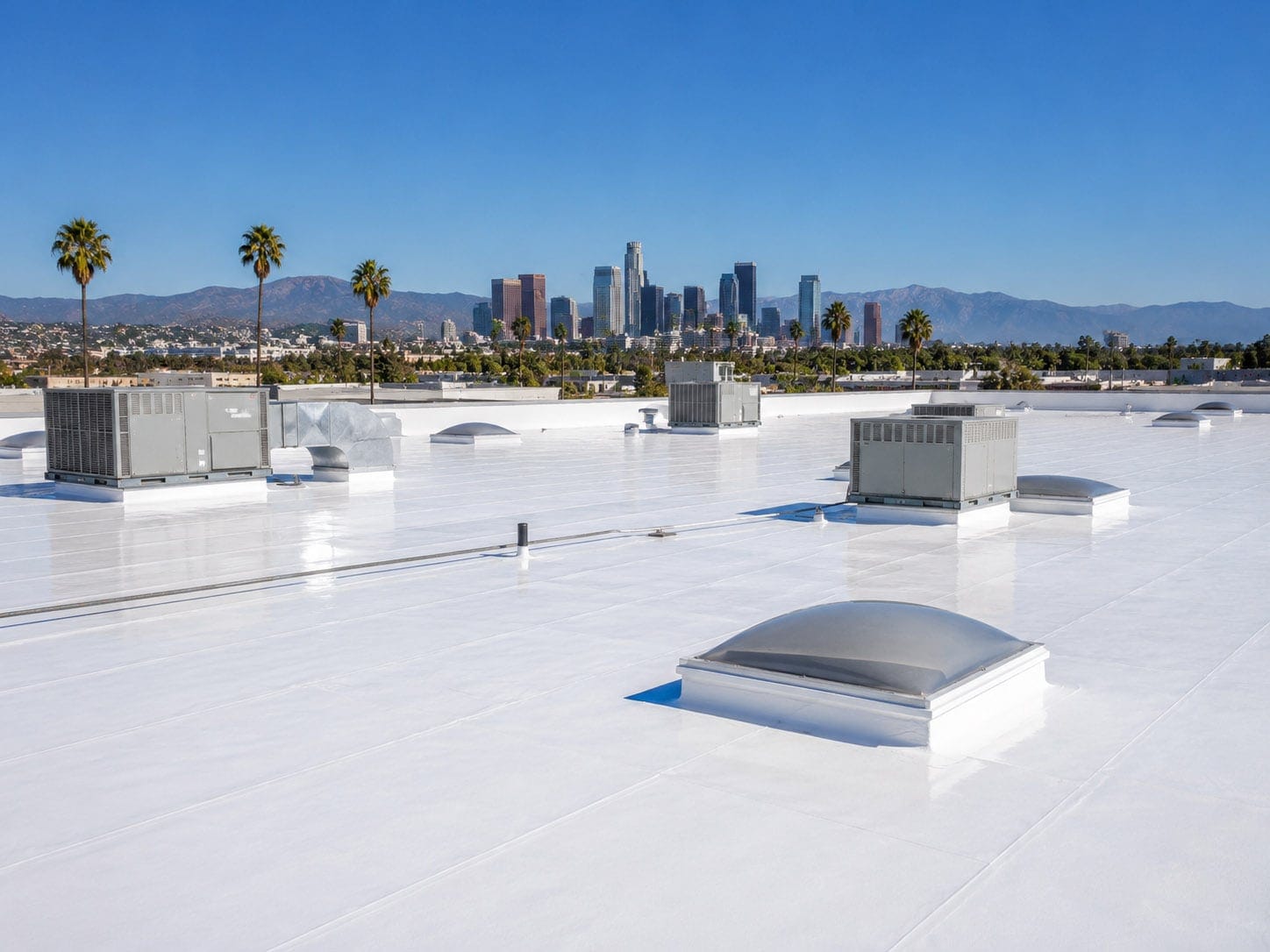
Here’s the plain version: California wants roofs that reflect more sunlight and release absorbed heat faster. That’s what a cool roof is. And yes, Title 24 requires cool-roof-rated products on many projects in the state, though the specifics depend on your climate zone, roof slope, and whether you’re building new or reroofing an existing structure.
What makes a roof “cool”
A cool roof isn’t a brand name or a single product type. It’s a performance standard based on two measurable properties:
- Solar reflectance: How much sunlight the roof surface bounces back instead of absorbing. A higher number means more reflection, less heat gain.
- Thermal emittance: How efficiently the roof releases whatever heat it does absorb. A surface with high thermal emittance radiates heat back into the atmosphere rather than transferring it into the building below.
These two numbers are sometimes combined into a single metric called the Solar Reflectance Index (SRI), which gives you a quick snapshot of overall cool-roof performance. The higher the SRI, the cooler the roof stays under direct sun.
In a place like Los Angeles, where rooftops bake under intense UV for eight or nine months a year, these properties directly affect energy costs, HVAC loads, and occupant comfort. That’s exactly why California’s energy code puts teeth behind the numbers.
How Title 24 applies to roofing projects
Title 24 is California’s Building Energy Efficiency Standards, maintained and updated by the California Energy Commission. The code covers a lot more than roofing, but the roofing provisions are where most contractors and building owners feel the impact first.
The key thing to know about Title 24 roofing requirements: they are not one-size-fits-all. Several factors determine exactly what your project needs.
Climate zone
California is divided into 16 climate zones, and the cool-roof thresholds can differ between them. Most of the greater Los Angeles area falls within zones that trigger cool-roof requirements, but the exact minimums for reflectance and emittance vary. Don’t assume what works in San Diego applies identically in Bakersfield.
Roof slope
The code distinguishes between steep-slope roofs (typically residential pitch) and low-slope roofs (common on commercial and flat-roof buildings). Low-slope roofs generally face stricter reflectance requirements because they catch more direct sun. Steep-slope roofs still have requirements, but the thresholds are different.
New construction vs. reroofing
New construction must comply with the current code cycle. Reroofing projects also trigger Title 24 compliance in many cases, though some exceptions exist depending on the scope of the work. If you’re tearing off and replacing, plan on meeting current standards.
Because the requirements shift with each code update cycle and can vary by jurisdiction, we always tell contractors and property owners to confirm the specifics with their local building department. In the City of Los Angeles, that’s LADBS (Los Angeles Department of Building and Safety). Getting it right before you order materials is a lot cheaper than getting it wrong at inspection.
CRRC ratings: the stamp that matters
When you’re shopping for cool roof materials, look for products rated by the Cool Roof Rating Council (CRRC). The CRRC is an independent organization that tests and lists the solar reflectance and thermal emittance values of roofing products. Their rated products directory is the standard reference that building departments and energy consultants use to verify compliance.
A product with a CRRC rating has been tested under standardized conditions, and its performance values are publicly listed. That matters at permit review and inspection. If your product isn’t CRRC-rated, you may need to provide alternative documentation or use a different compliance path, which adds time and cost.
Which roofing products meet cool-roof standards
This is where it gets practical. Cool-roof-rated products exist across most major roofing categories:
- Asphalt shingles: Manufacturers now offer shingles with reflective granules that hit cool-roof thresholds. You’re no longer limited to white or light gray. Darker-toned cool-rated shingles are available, though lighter colors still reflect more.
- Clay and concrete tile: Many tile profiles carry strong reflectance numbers, especially in lighter finishes. Concrete tile with reflective coatings is a popular choice for Southern California residential projects.
- Metal roofing: Factory-coated metal panels can achieve very high SRI values. Coatings with cool pigment technology allow even medium and dark colors to reflect more infrared radiation than traditional paint.
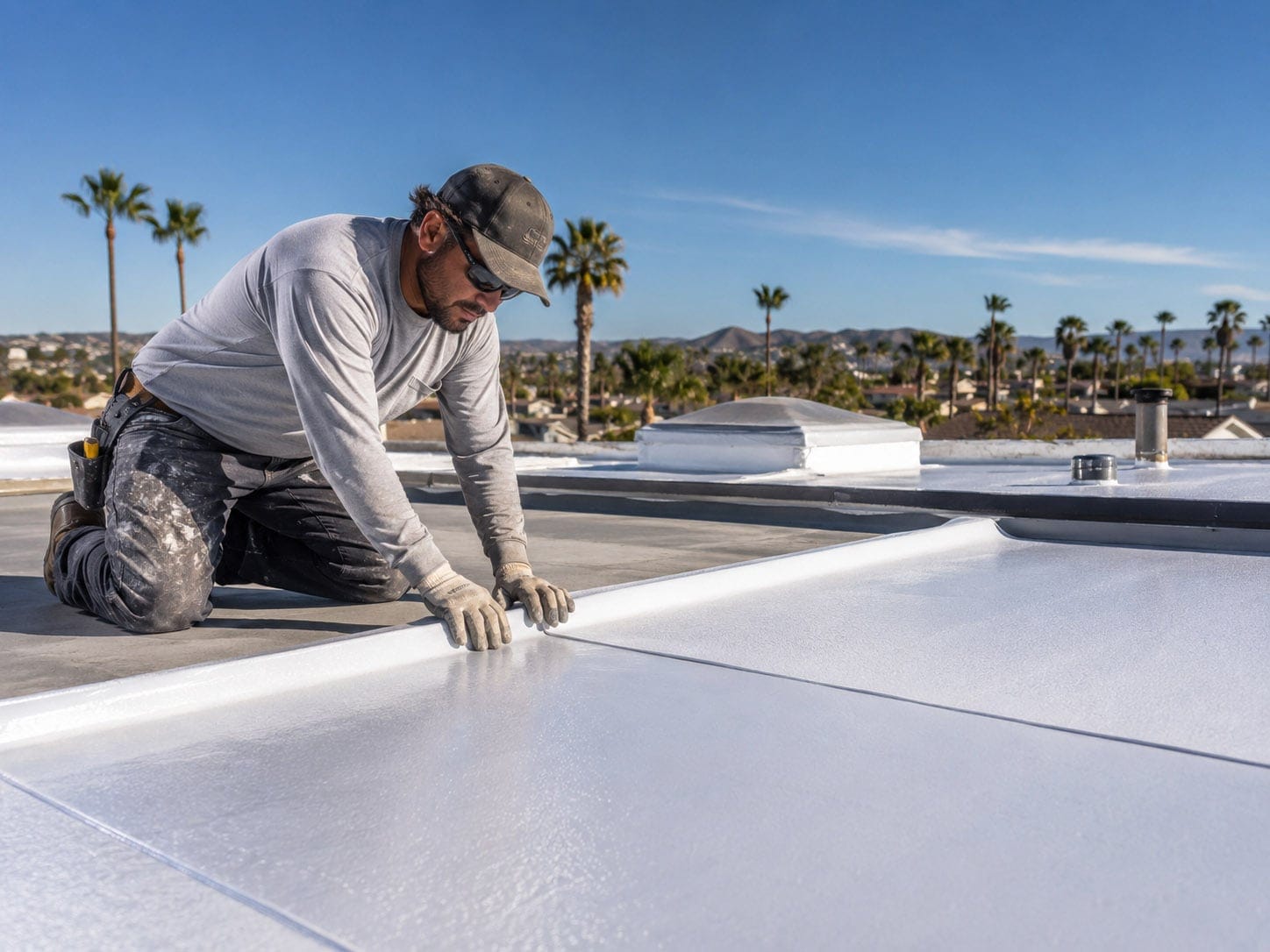
- Roof coatings: Elastomeric and acrylic coatings applied over existing surfaces can bring an older roof into cool-roof compliance, depending on the substrate and coating specs. This is common on commercial low-slope roofs.
- Composite and modified systems: Several composite shingle and modified bitumen products are available with CRRC-rated cool-roof performance.
The product landscape keeps expanding. What was limited to white membrane five or ten years ago now includes dozens of colors and profiles across shingles, tile, and metal.
Why it matters beyond code compliance
Meeting California cool roof requirements isn’t just about passing inspection. A properly specified cool roof reduces the cooling load on the building, which means lower energy bills and less strain on HVAC equipment. In Southern California’s climate, that benefit is real and measurable across the life of the roof.
For contractors, specifying cool-roof-rated materials from the start protects your reputation. Nobody wants a callback because a building department flagged non-compliant materials after the job is done. For property owners, it’s a straightforward investment that pays back through energy savings and extends the service life of the roof membrane or surface by reducing thermal cycling.
Frequently asked questions
Does every reroofing project in California need a cool roof?
Not necessarily, but most do in the climate zones that cover Southern California. The answer depends on roof slope, building type, and the scope of work. Check with your local building department before you order materials. Better to ask upfront than to rip and replace later.
Can I still get a dark-colored roof that meets Title 24?
Yes. Cool pigment technology has come a long way. Several manufacturers offer dark and medium-toned shingles, tiles, and metal panels with CRRC ratings that meet code. The selection is more limited than with lighter colors, but you have real options.
How do I verify that a product is CRRC-rated?
The Cool Roof Rating Council maintains a public directory of rated products. You can search by manufacturer, product name, or type. Your supplier should also be able to confirm whether a specific product carries a current CRRC rating.
What happens if I install non-compliant materials?
You risk failing final inspection, which means the job isn’t signed off and the permit stays open. Depending on the jurisdiction, you may need to remove and replace the non-compliant material or pursue an alternative compliance method, both of which cost time and money.
Getting the right materials for the job
We stock CRRC-rated cool roof products across shingles, tile, metal, and coatings at our yard. If you’re speccing a project and need to confirm that a product meets Title 24 for your specific climate zone and building type, give us a call or text at 213-747-1718. Se habla español. We can help you match the right product to the code requirements before you place your order.
For the installation itself, work with a licensed roofing contractor who understands Title 24 compliance and local permit requirements. We handle the materials side. Your contractor handles the labor and the permit process. That’s how good projects come together.
Stop by L.A. Roofing Materials at 112 W. Jefferson Blvd, Los Angeles, CA 90007. We’re open Monday through Friday, 6 AM to 4 PM, and Saturdays from 6:30 AM to noon. If you want to see samples or talk through a job, we’re here.