


A few damaged shingles do not always mean you need a whole new roof. In Los Angeles, though, the right call depends on more than the size of the damaged spot. Heat, UV exposure, Santa Ana winds, older underlayment, and local code requirements can turn a “small repair” into a short-term fix that fails again next season.
If you are trying to decide between a localized repair and a larger replacement, start with the condition of the surrounding roof, not just the one bad area. That is usually where the answer shows up.
What a repair can realistically solve

Asphalt shingle repair makes sense when the damage is limited, the rest of the roof is still in decent shape, and the system has useful life left in it. A good repair can buy time and protect the deck from water intrusion, especially when the issue was caused by one event, like a wind lift or a branch strike.
A patch is usually worth considering when:
- Only a small number of shingles are damaged or missing.
- The surrounding shingles are still lying flat and holding granules reasonably well.
- The roof is relatively younger, or at least not at the end of its service life.
- There is no sign that moisture has spread into the deck or underlayment.
- The repair area can be matched closely enough in color and profile for the owner’s expectations.
For property owners, that often means a contractor can replace a few tabs or laminated shingles and restore the weather barrier without tearing into large sections. For junior contractors, it means checking whether the roof can still take a clean tie-in without damaging adjacent courses.
How to assess the damaged area
Look at the shingle itself
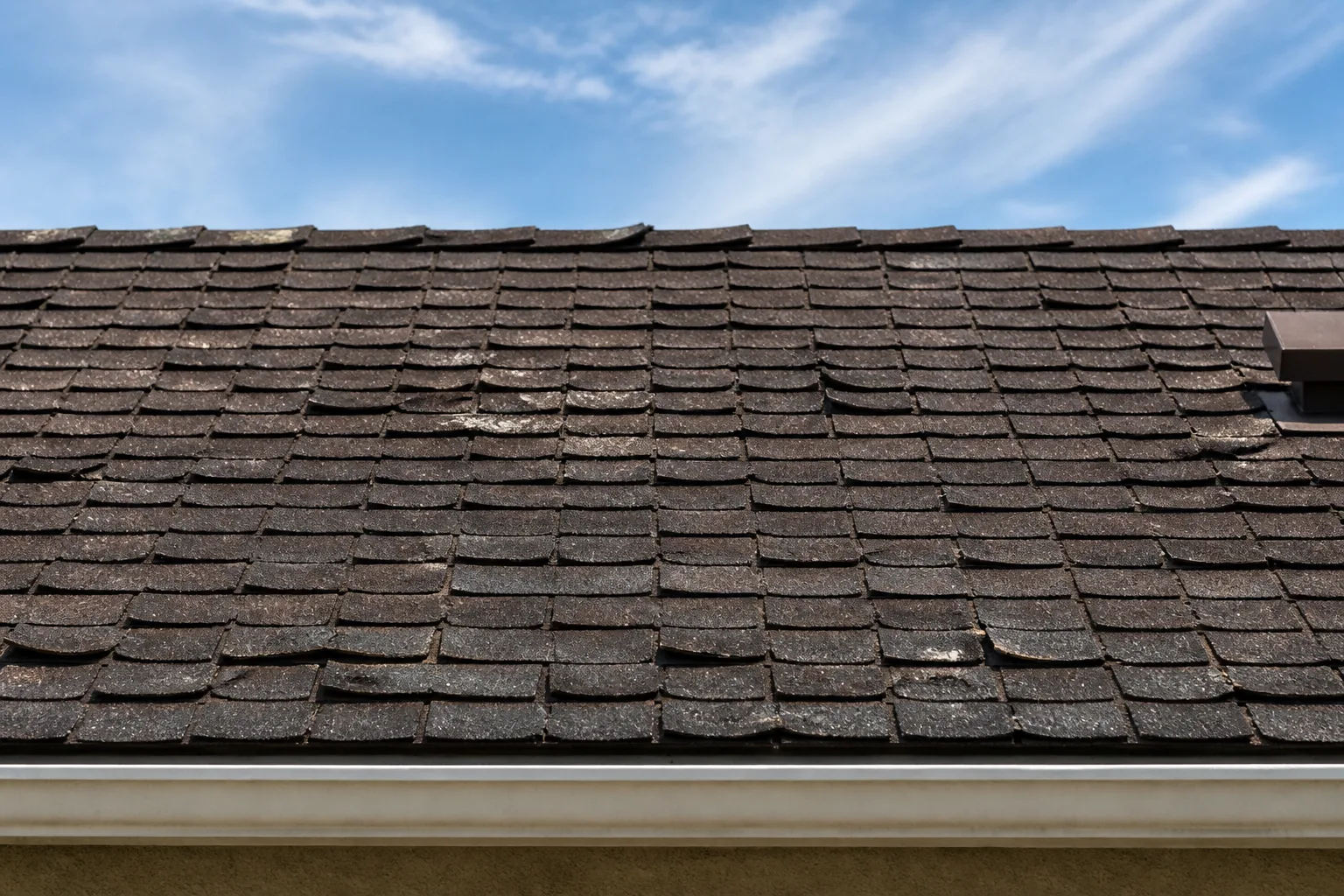
Start with the obvious failure point. A cracked shingle from foot traffic, thermal movement, or wind uplift may be isolated. Curling edges, torn tabs, exposed fiberglass mat, or bald spots from granule loss suggest broader aging.
In Los Angeles, thermal cycling matters more than some owners realize. A roof can bake all day, then cool off overnight. Over time, that movement can dry shingles out and make them more brittle, especially on slopes with hard sun exposure.
Check the pattern, not just the spot
One damaged shingle is one thing. Ten damaged shingles spread across different exposures is another. If the failures are scattered across ridges, valleys, and field areas, you are probably looking at system-wide wear rather than one repairable incident.
Pay attention to:
- Repeated cracking on south- and west-facing slopes
- Curling or clawing across multiple courses
- Shingles that have lost flexibility and break during handling
- Multiple lifted or creased tabs after a wind event
Inspect what is underneath
This is where patch-versus-replace decisions get real. If water has gotten past the shingles, the underlayment may be compromised. Soft decking, staining in the attic, or recurring leaks around the same area usually mean the repair needs to go deeper than the surface layer.
From what we see at the yard, a lot of disappointing repair jobs happen because someone focuses on visible shingles and ignores the condition underneath. If the felt or leak barrier is shot, new shingles over the top do not fix the actual problem.
When it makes sense to patch shingles
There are plenty of cases where it is smart to patch shingles and move on.
Localized wind damage
Santa Ana winds can lift tabs, crease shingles, or tear off a few pieces along edges and ridges. If the damage is confined and the surrounding roof still seals properly, a targeted repair is often the practical move.
Mechanical damage
Service traffic, dropped tools, satellite work, and branch impact can damage a specific area without meaning the whole roof is failing. If the shingles around it remain sound, a contractor can remove and replace that section.
One leak source that has been clearly identified
If the issue is tied to one penetration, one flashing transition, or one small field area, a repair may be enough, especially if the rest of the slope looks healthy.
For material selection, it helps to compare available profiles and colors with current stock from a supplier that handles residential roofing materials. Matching older shingles perfectly is not always possible, but getting close matters.
When replacement is the smarter spend
Sometimes the cheapest-looking option costs more because it delays the real fix. A repair stops making sense when the roof is telling you it is worn out in multiple ways at once.
The roof is near the end of its life
If the shingles are brittle, heavily weathered, and losing granules across broad areas, repairs become temporary by nature. You may fix one spot and disturb another during the process. On an older roof, that is common.
Owners often ask whether they should keep repairing “just a little more.” If leaks are becoming more frequent or the repair list keeps growing, replacement usually pencils out better over time.
Damage is widespread
If cracked, missing, curling, or lifted shingles show up across multiple slopes, patching turns into chasing symptoms. That is especially true after strong wind exposure or long-term sun damage.
The underlayment or deck is compromised
Once moisture has affected the layers below the shingles, surface repair alone is not enough. At that point, a licensed roofing contractor should evaluate how much of the assembly needs to be opened up and replaced. L.A. Roofing Materials supplies the shingles, underlayment, flashings, sealants, and related components, but the inspection and labor should be handled by a qualified roofer.
Code and fire considerations have changed
In parts of Los Angeles and surrounding Southern California, fire exposure and local requirements matter. Depending on the property location, roof assembly requirements may involve a Class A rated system, and some areas near wildland zones may trigger added rules. Requirements can also vary by jurisdiction, so confirm with the local building department and your licensed contractor before ordering materials.
If a roof needs major work anyway, replacement can be the better chance to bring the assembly in line with current expectations instead of investing in a patch on an outdated system.
Los Angeles conditions that push repairs over the line
Heat and UV wear
Los Angeles roofs take a beating from sun exposure. UV breaks materials down slowly, then all at once. Shingles that still look “mostly okay” from the ground can be dry and fragile up close.
Santa Ana winds
High winds do not just remove shingles. They can loosen seals, crease tabs, and create entry points for future leaks. A roof that has been through repeated wind events may need more than spot work, even if the obvious blow-offs are limited.
Heavy rain after long dry periods
Southern California often goes from dry weather to hard rain fast. That first real storm tends to expose weak spots. If an older shingle roof leaks in several places after the first rain, that usually points to a broader failure pattern.
What about cost?
It is fair to look at repair first. A small repair uses fewer materials, less labor, and less tear-off. But material cost is only one part of the decision.
Replacement becomes the smarter spend when:
- You are paying repeatedly for leak calls.
- Matching old shingles is difficult or impossible.
- The repair area keeps expanding once the roof is opened.
- The underlayment, flashing, or deck condition adds hidden scope.
On the supply side, shingle choice affects budget. Basic architectural options, upgraded profiles, accessory components, and ventilation details all change the final number. So does delivery logistics. For contractors and owners planning a reroof, it helps to review available products and services before the crew is scheduled, especially if you need underlayment, flashings, fasteners, and ventilation at the same time.
Frequently asked questions
Can one cracked shingle cause a leak?
Yes. Sometimes it does, sometimes it does not. A single crack may not leak right away, but it can let water in once wind-driven rain hits the right angle. If the shingle is on an exposed slope or near a transition, do not ignore it.
Can old shingles be matched for a repair?
Sometimes closely, sometimes not. Color fade, discontinued profiles, and weathering make exact matches tough on older roofs. A contractor and supplier can usually get you the nearest available option, but it is better to set expectations early.
Is asphalt shingles repair enough after wind damage?
It can be, if the damage is limited and the remaining roof still has life left. If the wind created creases or loosened seals across a wide area, replacement may be the safer call.
Should property owners get on the roof and inspect it themselves?
Ground-level photos and attic observations are fine. Walking a shingle roof is another matter. Older shingles can crack under foot, and steep slopes are a safety issue. For anything beyond a basic visual check, call a licensed roofing contractor.
Getting the next step right
If you are weighing a patch against replacement, start with an honest roof assessment from a licensed roofing contractor, then line up the materials before the job opens up. That is the part that keeps small repairs from turning into delays.
L.A. Roofing Materials has been supplying Southern California contractors and property owners since 1982, with will-call at 112 W. Jefferson Blvd, Los Angeles, CA 90007 and custom jobsite delivery available through the fleet delivery service. If you need replacement shingles, underlayment, flashing, sealants, or help sourcing a match, call or text 213-747-1718, Se habla español, or reach out through the contact page. Mon-Fri 6am-4pm, Sat 6:30am-12pm.