


Los Angeles roofs usually take their worst beating long before the rain starts. Months of hard sun, heat, dust, and wind dry out sealants, age exposed components, and loosen details that look fine from the ground. Then the first real storm shows up, water finds the weak spots, and a roof that made it through summer suddenly turns into an emergency.
That is why smart El Niño roof preparation in Los Angeles starts in the dry season, not when the forecast turns ugly. For contractors, this is the window to inspect, write scopes, line up materials, and get ahead of the rush. For property owners and facility managers, it is the time to catch maintenance issues before they become interior damage, tenant complaints, or shutdowns.
In Southern California, the problem is not constant wet weather. It is the swing from long dry spells to sudden heavy rain. Roof systems that have been baking for months have to shed water fast, and every weak flashing, clogged drain, slipped tile, or failed sealant gets tested at once.
Why Los Angeles roofs get exposed when the rain finally comes
Southern California weather creates a very specific kind of roof wear. UV exposure is relentless. It can dry and embrittle mastics, age coatings, and shorten the useful life of exposed accessories. Heat cycling does its own damage. Materials expand and contract, fasteners work a little, seams get stressed, and metal flashings can open up at transitions and penetrations.
Add Santa Ana wind events to the mix and you get another common issue: displaced tile, lifted edges, and debris packed into valleys and drainage paths. A roof may not leak in clear weather, but once the rain hits, blocked water flow and small openings become active failures.
That is why a proper rainy-season roof inspection in Los Angeles should focus on drainage and details, not just field areas. Most leaks show up at penetrations, walls, curbs, edges, transitions, and places where maintenance was deferred because the roof looked passable from below.
What El Niño means for planning, without guessing the forecast
El Niño winters get a lot of attention in California for a reason. They can shift storm patterns and raise concern about heavier or more frequent rain events across parts of Southern California. But planning a roof season around headlines is a mistake. Forecasts change, storm tracks move, and one bad downpour can be enough to expose a neglected roof even in a milder season.
The practical move is simple: prepare as if the first strong storm will test every weak point. If you want the broader seasonal outlook, check NOAA. That is the right place for current climate outlooks. For actual scope decisions, though, nothing replaces a roof inspection and a materials plan tied to the building in front of you.
What to inspect before the first serious storm
A good pre-rain review is methodical. Start at the drainage points and work outward. Then move up to penetrations, walls, and field conditions. Different roof types fail in different ways, but the checklist below covers the trouble spots we see most often in Los Angeles.
Flashings and penetrations
Look hard at pipe flashings, vents, skylights, HVAC curbs, wall transitions, counterflashings, and edge metal. These are classic leak points. Cracked sealant, loose fasteners, open laps, rusted sections, and movement at terminations deserve attention before the weather turns.
On older roofs, do not assume a little patching from years ago is still holding. UV can cook exposed repairs. If a detail has been patched more than once, it may be time for a real repair scope rather than another temporary fix.
Drains, gutters, and scuppers
Flat and low-slope roofs in particular need clear drainage. Leaves, dust, roofing granules, bird nests, and jobsite debris can choke drains and scuppers faster than people think. Water that cannot get off the roof will find a way into the building, or it will pond and stress the system.
Check strainers, leaders, downspouts, gutters, and overflow paths. Make sure water has somewhere to go if the primary drain line backs up. On steep-slope roofs, clean valleys and gutter runs so runoff does not back up under the roof covering.
Tile and shingle movement
After wind events, inspect for slipped, cracked, or missing pieces. Tile roofs often hide trouble well from the ground. One displaced tile can expose underlayment and create a leak path at a vulnerable spot. Asphalt shingles should be checked for lifted tabs, damaged ridge areas, and wear around penetrations.
If you are sourcing replacement pieces, matching profile and color matters, but function comes first. For projects involving tile systems, it helps to review available tile roofing materials before the rush starts.
Underlayment and leak barriers
On steep-slope systems, the visible roof covering is only part of the water-shedding story. Underlayment condition matters, especially where tile has shifted or where previous repairs suggest recurring moisture entry. If underlayment is brittle, torn, or failing at laps, the roof is at risk even if the field surface still looks decent.
For vulnerable transitions and repairs, contractors often need felts, underlayment, and leak barriers ready to go. Those are the kinds of products and services worth lining up before the first storm watch sends everyone to the yard at once.
Sealants, coatings, and exposed repairs
Check sealants around penetrations and terminations for shrinkage, cracking, or separation. Review coatings for wear, thin spots, blisters, and failed tie-ins around roof accessories. A coating that has lost integrity around details may not hold up under sustained rain.
This is also the time to identify old emergency patches. Some are still sound. Some are one storm away from failure. If a building has a history of recurring leaks, document every prior repair location and inspect those areas first.
Pre-season checklist for contractors
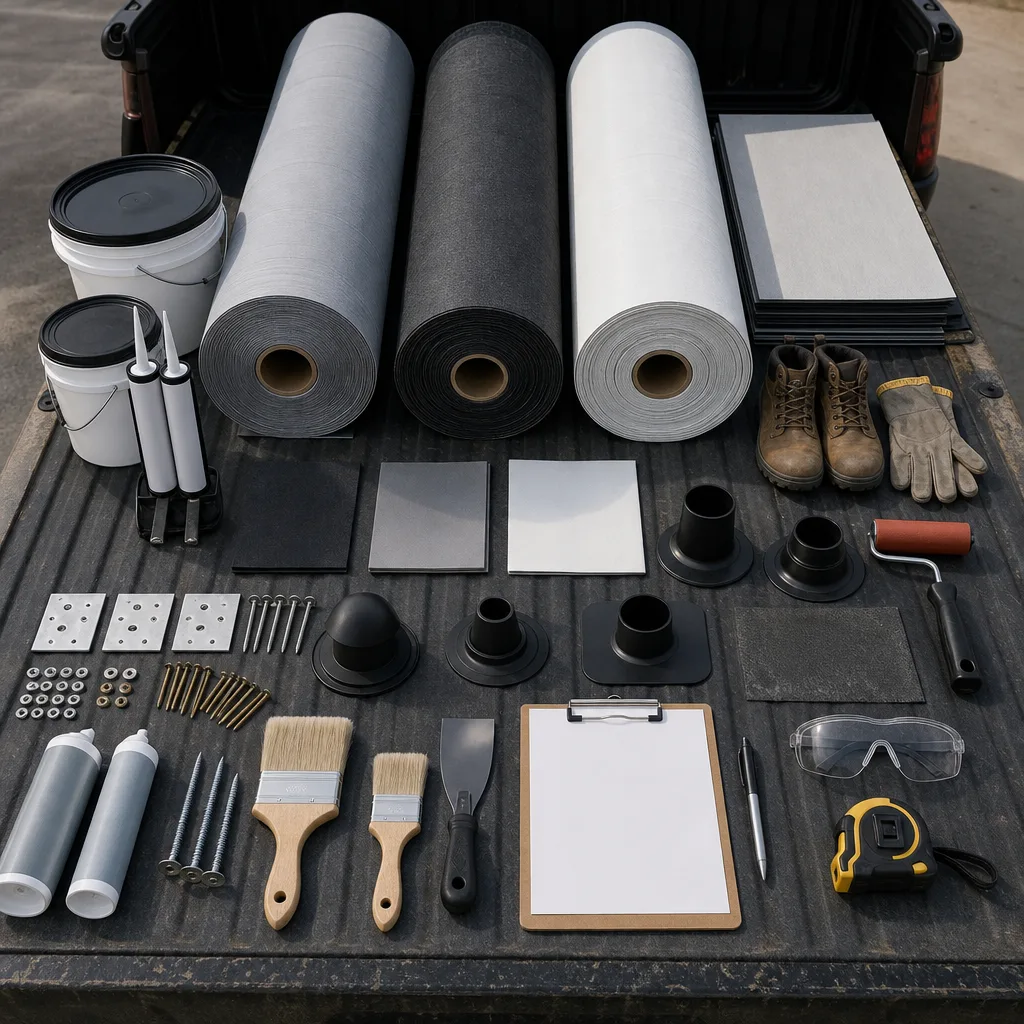
For roofing contractors, the goal is to move from reactive leak calls to planned work. A clean checklist helps crews inspect consistently and helps estimators write tighter scopes.
- Walk every roof section. Do not rely on photos from one corner or a report from last year.
- Inspect all flashings and penetrations. Note open laps, failed sealants, loose metal, rust, and movement at curbs, skylights, vents, and walls.
- Clear drains, gutters, scuppers, and valleys. Confirm primary and overflow drainage paths are open.
- Check for ponding indicators. Staining, debris rings, and uneven wear can point to drainage trouble.
- Look for wind displacement. On tile roofs, check for slipped or cracked tile after Santa Ana events. On shingle roofs, inspect ridges, hips, and perimeter areas.
- Verify underlayment condition where visible. Pay close attention at repairs, exposed areas, and transitions.
- Review coatings and mastics. Flag brittle, split, or UV-damaged repairs that need more than a touch-up.
- Photograph and map leak-prone details. This speeds approvals and helps crews return with the right material.
- Separate immediate repairs from larger capital work. Owners need to know what must be done now versus what can be scheduled.
- Order materials early. Felts, leak barriers, coatings, flashing, gutters, tile, and shingles get harder to source quickly once a storm is forecast.
If you need roofing supplies in Los Angeles that contractors can pick up fast, it pays to get ahead of the line. L.A. Roofing Materials is a supplier, not an installer, so the value is in getting the right materials staged for will-call or delivered to the jobsite before everyone is scrambling.
A shorter pre-rain checklist for property owners and facility managers
Property owners do not need to diagnose every roof detail, but they should know what deserves a contractor visit before the weather turns.
- Look for signs of past leaks inside. Stains, bubbling paint, damp ceiling tiles, and musty smells matter, even if they appeared months ago.
- Check roof drainage areas from a safe vantage point. Overflowing gutters, visible debris, and ponding signs are red flags.
- Ask whether the roof has been inspected since the last wind event. Tile movement is easy to miss from the ground.
- Review any deferred maintenance list. If flashing or sealant repairs were postponed in summer, move them up.
- Confirm who will respond if a leak starts. Have a licensed roofing contractor lined up before the first storm.
- Approve material ordering early. Waiting until the forecast turns can delay repairs.
If you are seeing active moisture or known weak spots, do not wait for a storm to confirm the problem. That is when a small issue becomes a much more expensive roof repair, the kind Los Angeles building owners wish had been scheduled earlier.
Materials that make sense to line up before the rush
Not every building needs a major repair campaign before winter. But many jobs do need a short list of materials ready to go. In Los Angeles, the common pre-rain needs usually include:
- Felts and underlayment for steep-slope repair areas and exposed sections.
- Leak barriers for vulnerable details and transitions where extra protection is needed.
- Roof coatings for compatible maintenance scopes and detail reinforcement.
- Flashing materials for penetrations, wall transitions, and edge conditions.
- Gutters and drainage accessories where flow problems are part of the leak story.
- Replacement tile or shingles for wind damage and broken field pieces.
Most of the contractors we work with do better when they treat pre-rain season like procurement season too. A clean scope without materials on hand still leaves you exposed.
What contractors should tell owners about timing
Owners often assume the first storm warning is the signal to act. By then, many yards are slammed, crews are reshuffling schedules, and every urgent repair suddenly costs more in time and disruption.
The better message is this: inspect early, approve early, order early. That is especially true for buildings with past leaks, older low-slope sections, aging tile underlayment, or drainage issues. If replacement or repair materials need to be matched, lead time matters even more.
L.A. Roofing Materials has been supplying Southern California contractors for decades, with will-call service and custom jobsite fleet delivery that helps keep schedules moving. If you want to talk through a material list, call or text 213-747-1718. Se habla español.
FAQ
Should a roof be inspected even if it did not leak last winter?
Yes. A roof can make it through one season and still be one storm away from trouble. Dry-weather aging is a big part of the Los Angeles problem. You are not just checking for last year’s leak, you are checking what summer did to the roof since then.
What matters more before rain, the roof covering or the flashing details?
Both matter, but leaks often start at the details first. A roof can have decent field coverage and still fail at a curb, vent, wall, or edge. That is why inspections need to be detail-heavy, not just a quick look across the surface.
Do property owners need a roofer for every issue they spot?
For actual repairs, yes, use a licensed roofing contractor. Owners and managers can document stains, drainage problems, and visible debris, but diagnosis and repair scope should come from a qualified pro. L.A. Roofing Materials supplies the materials those contractors use.
When should materials be ordered for pre-rain work?
Earlier than feels necessary. Once the first serious storm is in the forecast, demand jumps fast. If a building already has known trouble spots, get the repair list approved and the materials lined up before everyone else is chasing the same items.
Your next move before the forecast changes
Walk the roofs now, write the punch list, and separate quick repairs from bigger work that needs budgeting. If you are a property owner, get a licensed roofing contractor on site before the first downpour tests old weak spots. If you are a contractor, build your material list while availability is still better and schedules are still manageable.
For material pickup or custom jobsite delivery, contact L.A. Roofing Materials, Inc. at 112 W. Jefferson Blvd, Los Angeles, CA 90007, email info@laroofingmaterials.com, or call 213-747-1718. Hours are Monday through Friday, 6am to 4pm, and Saturday, 6:30am to 12pm. If you want a local supplier that knows how Southern California roofs fail when the weather flips, this is the time to get your order moving.