


Two membrane systems dominate the flat and low-slope roofing market in Southern California: TPO (thermoplastic polyolefin) and modified bitumen. Both work. Both have long track records on commercial buildings, multifamily properties, and residential additions across Los Angeles and the surrounding region. But they’re built differently, installed differently, and perform differently under the kind of punishment Southern California weather delivers.
Here’s the core difference. TPO is a single-ply thermoplastic membrane, typically white or light-colored, that gets heat-welded at the seams. Modified bitumen is an asphalt-based membrane reinforced with polyester or fiberglass, applied in multiple layers using torch, hot asphalt, cold adhesive, or self-adhering sheets. TPO is lighter and inherently reflective. Modified bitumen is thicker, more forgiving on irregular substrates, and easier to patch. The right pick depends on the building, the budget, the contractor’s preference, and what matters most for long-term performance.
How they handle Southern California heat and UV
Flat roofs in this region take serious abuse from the sun. Twelve months of intense UV, surface temperatures that can climb past 150°F in summer, and almost no relief from cloud cover for half the year. Both systems can handle it, but they handle it differently.
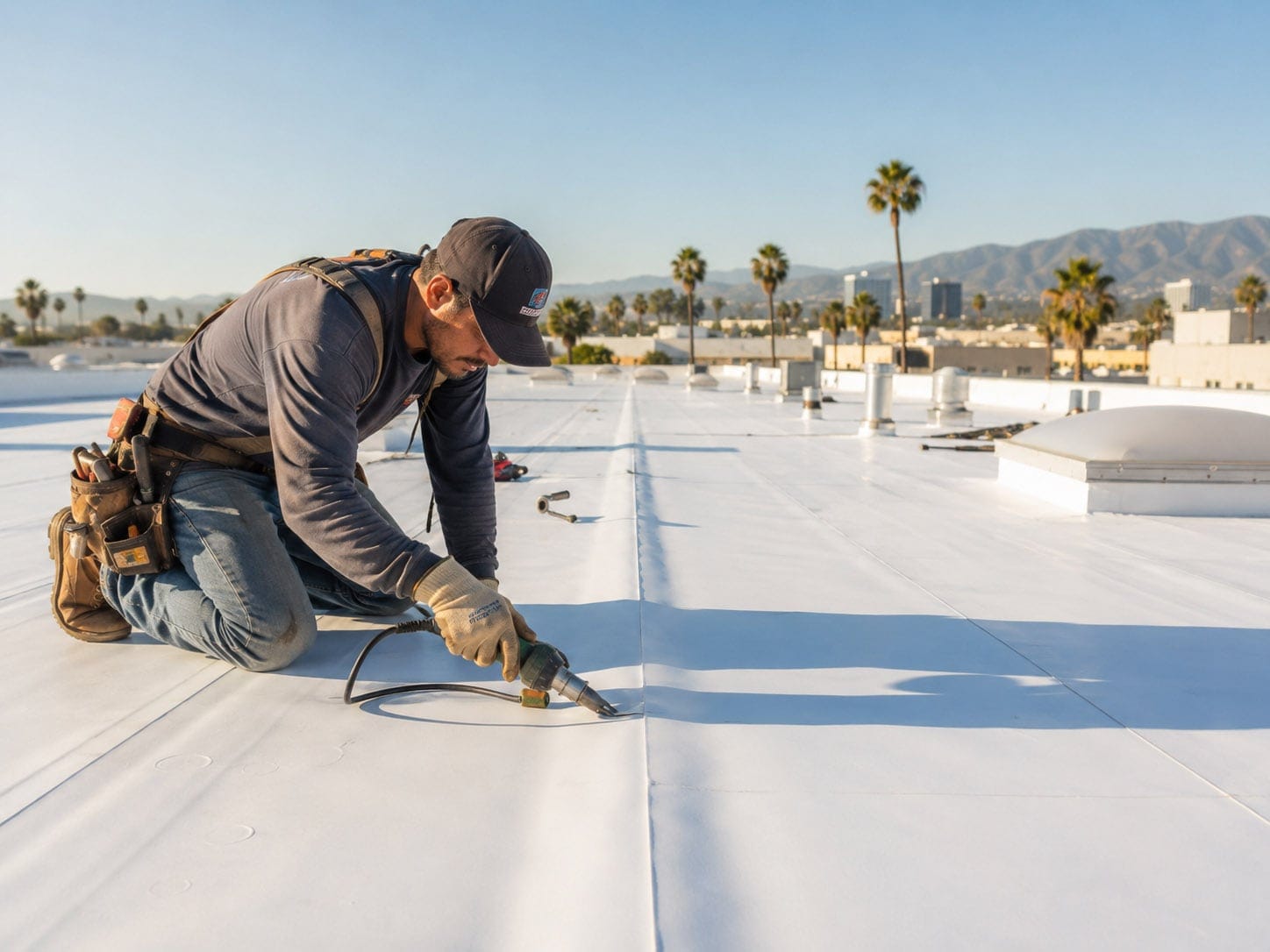
TPO membranes are engineered with UV stabilizers and heat-welded seams that create a continuous waterproof surface. White TPO reflects a significant portion of solar energy, which keeps the membrane itself cooler and reduces thermal cycling stress. That reflectivity also helps meet California’s Title 24 cool-roof requirements without additional coatings.
Modified bitumen is darker by nature, though cap sheets with reflective mineral granules or factory-applied coatings can boost its solar reflectance enough to meet Title 24 on many projects. Without those features, a standard dark mod bit roof will absorb more heat. That said, the multi-ply construction of a modified bitumen roofing system gives it built-in redundancy. If the surface layer degrades from UV, there’s still material underneath protecting the building.
Reflectivity and Title 24 compliance
California’s energy code sets minimum solar reflectance and thermal emittance values for roof replacements on most building types. For commercial roofing projects, steep-slope and low-slope roofs alike need to hit specific cool-roof thresholds or compensate with other energy tradeoffs.
White TPO meets cool-roof requirements out of the box in most cases. It’s one reason TPO has become so popular on commercial buildings, warehouses, and retail centers throughout Southern California.
Modified bitumen can comply too, but it usually requires a cool-roof-rated cap sheet or a reflective roof coating applied after installation. Coatings add a maintenance step down the road, since they need reapplication every several years. That’s not necessarily a dealbreaker. Plenty of building owners prefer the toughness of mod bit and budget for periodic coating maintenance. It’s just a different approach. Local code requirements vary by jurisdiction, so confirm specifics with your building department before specifying either system.
Seams and installation
Seam integrity is everything on a flat roof. Water doesn’t shed the way it does on a pitched surface, so any weak point in the membrane will eventually find trouble.
TPO roofing seams are heat-welded with a hot-air gun. When done correctly, the welded seam is actually stronger than the field membrane itself. The key phrase there is “when done correctly.” Heat welding requires proper equipment, the right temperature settings for ambient conditions, and a crew that knows the material. Inconsistent welds are one of the more common failure points on TPO roofs.
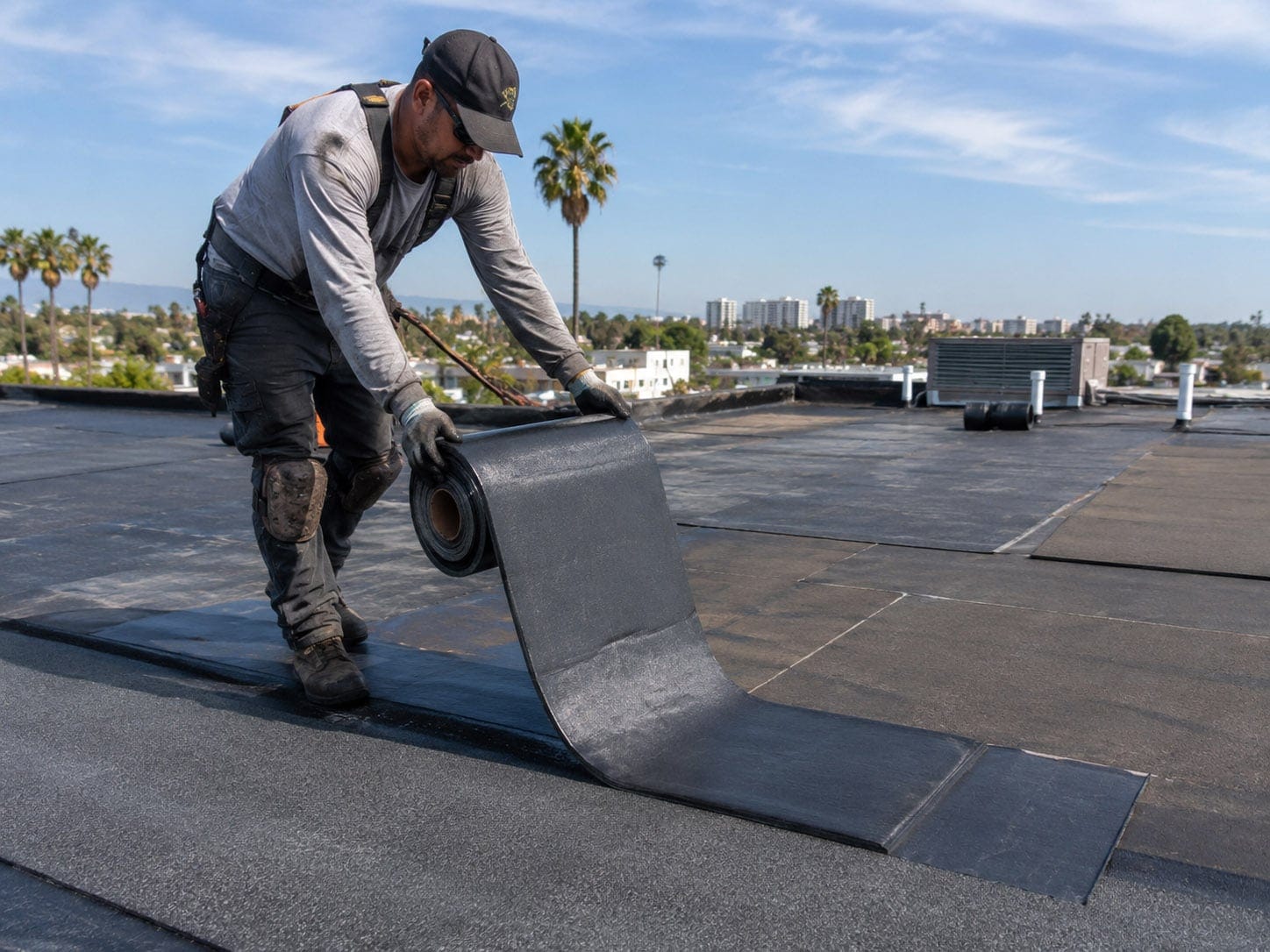
Modified bitumen seams overlap and bond through heat (torch-applied), hot asphalt, cold adhesive, or the membrane’s own self-adhering layer. Torch-applied mod bit has been standard for decades and produces reliable seams, but open-flame work on a roof carries fire risk. Cold-applied and self-adhering options eliminate that risk entirely, which matters in wildfire-prone areas of Southern California where fire safety during construction is taken seriously.
Durability and repairability
Both systems, properly installed over the right substrate and insulation, can deliver 20 years or more of service life. Some modified bitumen roofs have lasted well beyond that with periodic maintenance and coating.
TPO’s single-ply construction makes it lighter and easier to install on large, unobstructed roof areas. But that single ply is also its vulnerability. Punctures from foot traffic, dropped tools, or HVAC work can penetrate the membrane. Repairs are straightforward for a skilled contractor, just clean, prime, and weld a patch, but the membrane doesn’t have the built-in backup layers that mod bit offers.
Modified bitumen’s multi-layer construction is inherently more resistant to punctures and abuse. On roofs with heavy foot traffic, lots of mechanical equipment, or irregular penetrations, that extra thickness pays off. Repairs are simple: cut a patch, torch or adhere it, and the roof is watertight again. Most contractors who’ve worked with mod bit for years find repairs second nature.
For buildings where rooftop activity is minimal and the membrane mostly sits undisturbed, TPO’s lighter weight and reflectivity may be the better fit. For buildings that see regular maintenance traffic or have complex layouts, mod bit’s toughness earns its keep.
Cost considerations
We won’t quote specific prices because material costs shift with supply conditions, project size, and specification details. But here’s the general picture.
TPO membrane material tends to cost less per square foot than a full modified bitumen system, partly because it’s a single-ply product versus a multi-layer assembly. Installation labor can also be lower on straightforward TPO jobs because the rolls cover large areas quickly.
Modified bitumen systems cost more upfront due to the multiple layers: base sheet, interply (sometimes), and cap sheet plus adhesives or asphalt. But that multi-layer assembly contributes to the system’s durability and can mean fewer repairs over the roof’s lifespan.
The real cost comparison needs to account for the full lifecycle. Factor in expected maintenance, coating reapplication (if using mod bit for cool-roof compliance), repair frequency, and projected service life. A contractor who knows both systems and understands the building’s specific demands is the best person to help run that math.
Frequently asked questions
Can I put TPO over an existing modified bitumen roof?
Sometimes. It depends on the condition of the existing roof, local code limits on the number of roof layers, and whether the substrate is sound enough to support the new membrane. A licensed roofing contractor should inspect the existing assembly before specifying an overlay. In many cases, a full tear-off and new installation is the better long-term move.
Which one is better for meeting California’s cool-roof requirements?
White TPO meets cool-roof standards right off the roll. Modified bitumen can meet them with a cool-roof-rated cap sheet or reflective coating, but it takes an extra step. Neither is “better” in absolute terms. It depends on the building and the owner’s maintenance preferences.
Do you carry both systems?
Yes. L.A. Roofing Materials stocks both TPO and modified bitumen membranes along with the underlayment, rigid insulation, adhesives, fasteners, and accessories needed for a complete low-slope roof assembly. We also carry flat roof materials like reflective coatings for maintaining cool-roof compliance over time.
Picking the right system for the job
There’s no universal winner here. TPO makes a strong case on large, open commercial roofs where reflectivity, weight, and speed of installation matter. Modified bitumen earns its spot on buildings with heavy foot traffic, complex penetrations, or owners who prefer the proven multi-layer approach. Both work well in Southern California’s climate when specified and installed correctly.
If you’re a contractor pricing a job and want to talk through which system fits, or if you’re a building owner trying to understand what your roofer is recommending, give us a call or text at 213-747-1718. Se habla español. We stock both membrane systems plus everything that goes under and around them, and we’re happy to help you figure out the right spec before you order. Will-call or jobsite delivery, whatever works for your schedule.