


Metal roofing makes a lot of sense in Los Angeles. The climate here is brutal on roofing materials in ways people don’t always think about: relentless UV exposure, surface temperatures that can push well past 150°F on a dark roof, months of bone-dry heat followed by heavy rain that arrives fast and leaves faster. Metal handles all of it. It reflects heat, sheds water cleanly, resists fire, and lasts decades longer than most alternatives. That’s why contractors across Southern California are installing more of it every year, on everything from modern custom homes to commercial buildings and multifamily projects.
If you’re a contractor sourcing materials or a property owner researching your options, here’s what you need to know about the types of metal roofing available, why they perform well in this climate, and what drives the cost.
The main types of metal roofing panels
Not all metal roofs look or perform the same. The panel system you choose affects everything from aesthetics to weathertightness to installation complexity. Here are the four categories that cover most residential and commercial work in the Los Angeles area.
Standing seam
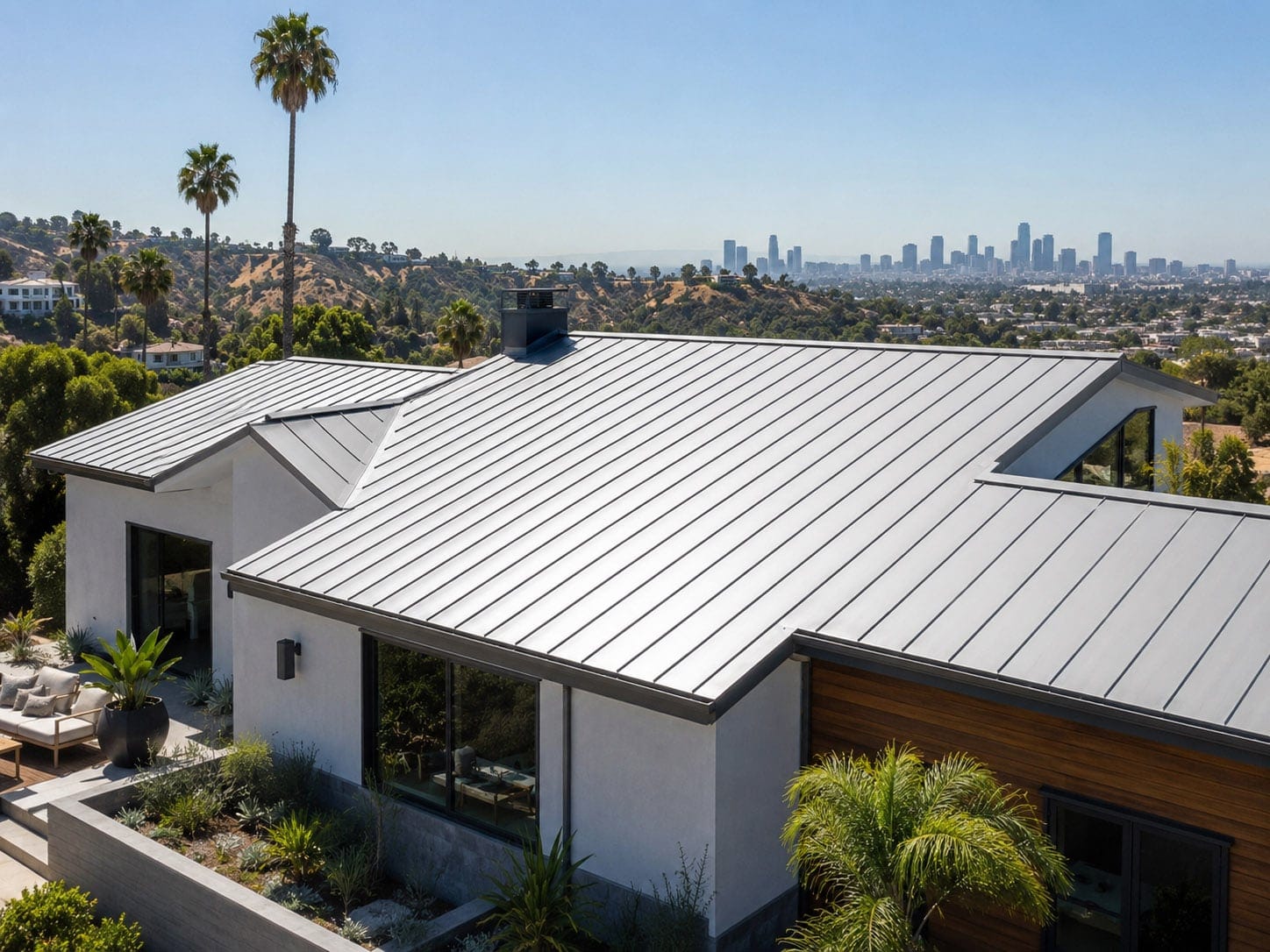
A standing seam metal roof uses interlocking panels with raised seams that conceal the fasteners. Because no screws penetrate the panel face, it’s the most weather-tight metal roof system you can install. Standing seam is popular on modern and contemporary architecture, but it works on plenty of traditional styles too. Panels are typically steel or aluminum, available in a wide range of factory-applied colors and finishes, including cool-roof-rated options that meet California Title 24 requirements. This is the premium choice for longevity and performance.
Exposed-fastener and corrugated panels
These are the workhorses. Corrugated and R-panel systems use visible fasteners driven through the panel into the deck or purlins. They’re faster to install and more budget-friendly than standing seam, which makes them a go-to for agricultural buildings, warehouses, covered patios, and some residential applications. The tradeoff is that exposed fasteners can be a maintenance point over time, since the rubber washers beneath each screw eventually degrade under UV. In SoCal’s sun, that degradation happens faster than in cooler climates. Quality fasteners and periodic inspections help.
Stone-coated steel (metal tile)
Stone-coated steel panels are stamped to replicate the look of clay tile, concrete tile, or wood shake, then coated with stone granules bonded to the steel substrate. They’re a smart option for neighborhoods with HOA restrictions or historic aesthetic requirements where a “metal roof” look won’t fly. The big advantage over actual clay or concrete tile? Weight. Stone-coated steel weighs a fraction of what traditional tile does, which means less structural demand on the building. It still carries a Class A fire rating, and many profiles hold up well against the wind-driven rain that comes through during winter storms.
Copper
Copper is in a class by itself. It’s the longest-lasting roofing material you can put on a building, with a lifespan measured in generations. It develops a natural patina over time that many owners consider part of the appeal. Copper roofing is most common on high-end residential projects, historic restorations, accent features like dormers and turrets, and architectural details like flashing and gutters. The cost reflects the material’s value, but for the right project, nothing else comes close.
Why metal performs well in Southern California
Heat reflectivity and cool-roof compliance
Southern California’s sun is the single biggest factor in roof wear. Metal roofing with a factory-applied cool-roof coating reflects a significant portion of solar radiation rather than absorbing it. That means lower attic temperatures, reduced cooling loads, and compliance with California’s Title 24 energy code. Many standing seam and stone-coated steel products meet or exceed Title 24 cool-roof requirements right out of the box. For commercial flat-to-low-slope applications, metal panels with high solar reflectance and thermal emittance values can make a real difference in energy costs.
Class A fire resistance
If you’re building or re-roofing in a Wildland-Urban Interface (WUI) zone, fire resistance is not optional. Metal roofing carries a Class A fire rating, the highest available. Combined with a qualifying underlayment and proper installation details, it meets the requirements of California’s Chapter 7A wildfire standards. For properties in the hillside and canyon areas around Los Angeles, that’s a significant consideration. Check with your local building department on specific assembly requirements, because they vary by jurisdiction.
Longevity and low maintenance
A quality metal roof can last 40 to 70 years depending on the material and installation. Standing seam steel with a Kynar/PVDF finish holds its color and resists chalking for decades. Copper lasts even longer. Compare that to a composition shingle roof that might give you 20 to 30 years in SoCal’s UV environment, and the long-term value equation shifts fast. Metal doesn’t crack, curl, or lose granules. It doesn’t attract moss or algae the way some materials do in coastal zones.
Lightweight versus tile
Clay and concrete tile are beautiful and traditional in Los Angeles, but they’re heavy. A concrete tile roof can weigh 900 to 1,100 pounds per square (100 square feet). Metal roofing typically comes in around 50 to 150 pounds per square, depending on the product. That weight difference matters for older structures, second-story additions, and any project where the existing framing wasn’t designed for a heavy roof load.
What drives the cost
We won’t quote specific dollar figures because pricing depends on too many variables. But here are the factors that move the needle:
- Panel type: Standing seam costs more than exposed-fastener. Stone-coated steel falls somewhere in between. Copper is the most expensive.
- Material gauge: Thicker steel (lower gauge number) costs more but resists denting and performs better long-term.
- Coating system: PVDF/Kynar finishes outperform standard polyester coatings, especially under SoCal’s UV, and they cost accordingly.
- Roof complexity: Hips, valleys, penetrations, and steep pitches all add labor and trim costs. A simple gable is the easiest roof to panel.
- Underlayment and accessories: High-temp synthetic underlayment, proper flashing, ridge ventilation, and sealants are part of the total installed cost.
For contractors pricing a job, we can help you spec the materials and work through quantities. That’s what we do.
Frequently asked questions
Does a metal roof make noise when it rains?
Not really. When installed over a solid deck with underlayment (which is standard for most residential applications in Los Angeles), the sound difference between metal and other roofing materials is minimal. The “tin roof in a rainstorm” reputation comes from agricultural buildings with no deck or insulation underneath. A properly built residential assembly is quiet.
Will a metal roof rust in the coastal areas near LA?
Modern steel roofing panels come with galvanized or Galvalume coatings designed to resist corrosion. Aluminum panels are naturally corrosion-resistant and often a better fit for properties within a few miles of the coast. Copper doesn’t rust at all. Your supplier can help you pick the right substrate for your location.
Can I put a metal roof over my existing shingles?
Sometimes. It depends on the condition of the existing roof, the local building code, and the specific metal system. Some jurisdictions allow a metal re-roof over one layer of asphalt shingles, but always confirm with your local building department and your licensed roofing contractor before making that call.
Does metal roofing attract lightning?
No. Metal roofing does not increase the likelihood of a lightning strike. Metal is a conductor, but lightning targets the highest point in an area, not a specific material. If a metal roof were struck, it would actually dissipate the energy more safely than a combustible material.
Getting the right materials for the job
If you’re searching for a metal roofing supply near me in Southern California, L.A. Roofing Materials carries metal and copper roofing products for both residential and commercial projects. We’ve been supplying contractors from our yard at 112 W. Jefferson Blvd in Los Angeles since 1982. Family-owned, and Steve and the crew are happy to help you spec the right panel system, work through quantities, and get materials to your jobsite.
For metal roofing in Los Angeles, we offer will-call pickup and custom delivery direct to the jobsite. Installation should always be handled by a licensed roofing contractor, but we’ll make sure the materials are right and they’re there when you need them. Call or text us at 213-747-1718 (se habla español) or email info@laroofingmaterials.com. We’re open Monday through Friday, 6 AM to 4 PM, and Saturday mornings until noon.