


Key Takeaways
- Roof ventilation helps hot air escape the attic, which can reduce heat buildup during Los Angeles summers.
- A balanced system usually works best, with intake vents low on the roof and exhaust vents higher up.
- Signs of poor attic ventilation include a hot upstairs, stuffy attic air, and shingles that seem to age too fast.
- Different homes need different vent products, including ridge vents, box vents, turbine vents, soffit vents, and gable vents.
- Before summer, it helps to check airflow, inspect blocked vents, and talk through material options before buying.
Most homeowners asking about roof ventilation are really trying to solve one problem, a house that gets brutally hot once summer hits. The direct answer is that good attic ventilation gives trapped heat a way out. If your attic holds hot air all day, that heat pushes down into the rooms below and can make your whole house harder to cool.
In Los Angeles, that matters more than people think. Long hot stretches, strong sun, and Santa Ana wind conditions can all put stress on a roof system. A proper mix of intake and exhaust ventilation helps air move through the attic instead of letting heat sit there. That does not fix every comfort problem in a house, but it usually makes a real difference.
If you’re sorting out options before summer, the goal is simple. Figure out what type of attic ventilation your roof can actually use, then buy materials that fit the roof design and local code needs. At L.A. Roofing Materials, we help homeowners and contractors sort through vent products, underlayment, and related roofing supplies in Los Angeles every day.
 />
/>
How roof ventilation works
Think of your attic like a parked car in the sun. If heat gets in and has nowhere to go, the space gets hotter and hotter.
Roof ventilation works by moving air through the attic. Fresh air usually comes in through intake vents placed lower on the roof, often at the soffits or eaves. Hot air rises and exits through exhaust vents placed higher up, like ridge vents or other roof vents near the top. That natural flow is what you want.
When the system is balanced, it can help reduce trapped heat and moisture. Balance matters. If you only add exhaust vents and there is not enough intake, airflow can be weak. If vents are blocked by insulation, paint, debris, or old construction changes, the system may look fine from outside and still not do much.
That is why attic ventilation is not one-size-fits-all. Roof shape, attic layout, insulation, and even whether your home has open soffits all affect what products make sense.
Why it matters before LA summer
Summer in Southern California is not just hot. It is long, dry, and rough on roofs.
When an attic overheats, homeowners usually notice it first in the living space. The second floor feels warmer. Rooms near the ceiling get stuffy by late afternoon. Air conditioning seems to run longer. Sometimes people assume the roof material is the whole issue, but poor ventilation can be part of the problem too.
Heat buildup can also be hard on roofing materials over time. We are careful about making blanket claims because every roof system is different, but what we see at the yard is that homes with poor airflow often have more trouble with excessive attic heat and the problems that come with it. If your roof is already being evaluated, summer prep is a good time to ask whether the ventilation setup still makes sense.
And in Los Angeles, it pays to think ahead. Once the first big hot spell hits, everybody starts calling at once.
 />
/>
Signs your attic ventilation may need attention
Some issues are obvious. Others are easy to miss.
- Your upstairs gets much hotter than the rest of the house.
- Your attic feels extremely hot and stale during the day.
- You notice vents that look blocked, painted shut, or covered by debris.
- Your soffit vents are present, but insulation may be packed tightly against them from inside.
- You are replacing roofing materials and no one has checked the vent layout yet.
If any of that sounds familiar, this is the time to ask questions. Before summer is better than the middle of August.
What ventilation products are available
There are several common products used for roof ventilation and attic ventilation. The right choice depends on your roof design, not just personal preference.
Here are some of the vent types homeowners usually hear about:
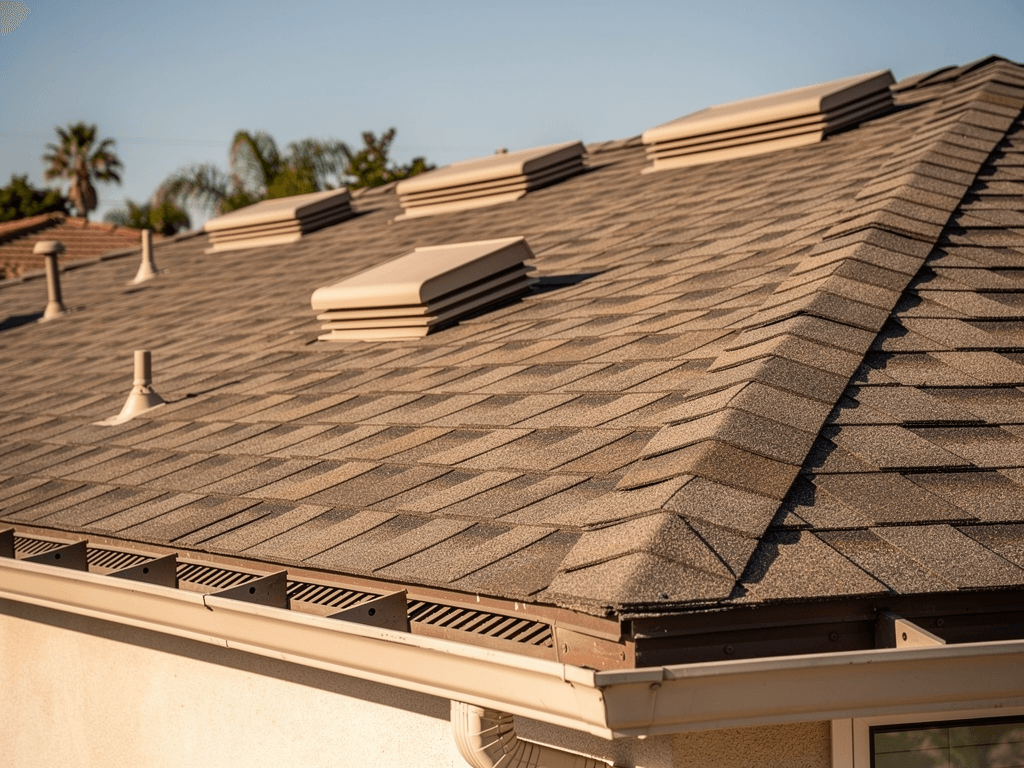
- Ridge vents, which run along the roof peak and let hot air escape high on the roof
- Box vents, also called static vents, which exhaust hot air through individual vent units
- Turbine vents, which use wind to help pull air out of the attic
- Soffit vents, which bring in outside air at the eaves and support intake airflow
- Gable vents, which are placed in exterior attic walls on some homes
- Powered vents, which use electric or solar operation in certain setups
Each option has tradeoffs. A ridge vent system can look clean and low-profile, but it needs the roof design and intake setup to support it. Box vents can work well on many homes, especially where ridge vent is not the best fit. Soffit vents are a big deal because intake is where a lot of systems fall short.
If you are not sure what your roof currently has, take a few photos and bring them by the yard. We can help you identify the materials side of the job and, if you need someone to do the work, point you to a roofer through our contractor referral page.
What to check before buying materials
Start with the roof you have, not the product you saw online.
A low-slope roof, a steep-sloped shingle roof, and an older tile roof may all need different ventilation products and accessory pieces. Some homes have soffits. Some do not. Some attics are easy to vent. Others have chopped-up framing or additions that complicate airflow.
Before buying, it helps to look at a few basics. What kind of roof covering is on the house now? Where air currently enters and exits. Whether the attic is open throughout or broken into separate sections. Whether the vents appear blocked. And whether the planned roof system has code or manufacturer requirements tied to ventilation.
This is also where product compatibility matters. Flashing pieces, vent profiles, bug screens, fasteners, and underlayment details all need to match the roof assembly. Homeowners do not need to know every part by memory, but they do want the right list before the job starts.
Not sure which one you need? Give us a call or text at 213-747-1718. Se habla español.
 />
/>
How this ties into summer prep
Waiting until the hottest week of the year makes everything harder.
If you already know your roof is due for material replacement, ask about ventilation at the same time. If your attic has been hot for years, do not assume new shingles alone will solve it. Ventilation, insulation, and roof design all work together, but ventilation is often the part homeowners can clearly review before work begins.
For Los Angeles homes, summer prep usually means checking for blocked soffits, damaged vent caps, worn flashings around vent penetrations, and missing or mismatched vent materials if a reroof is being planned. If you are buying from a supplier, bring measurements, photos, and as much information as you can. That makes it easier to sort out what belongs on your roof and what does not.
Steve grew up in this business. His dad Don started L.A. Roofing Materials in 1982, and Steve took over in 2012. If you have ever stood in the yard wondering which vent piece matches an older roof, that kind of long-term product knowledge helps.
What homeowners in Los Angeles should keep in mind
Local weather and local rules both matter.
Southern California heat puts a lot of focus on cooling and energy use, and some roof projects may also involve Title 24 or cool roof requirements depending on the job. Ventilation is related, but it is not the same thing as picking a cool roof product. You want to look at the whole roof assembly and make sure the vent plan makes sense for that specific house.
That is another reason to buy from a supplier that knows the local market. At our products and services page, you can get a sense of the roofing materials, accessories, and jobsite support we carry for homeowners and contractors across Los Angeles.
Frequently Asked Questions
How do I know if my home has poor roof ventilation?
If your upstairs stays hot, your attic feels like an oven, or vents look blocked, those are common signs. A roofer can inspect the roof setup, and we can help you identify the material options once you know what the roof needs.
What is the difference between roof ventilation and attic ventilation?
Most people use those terms interchangeably. Usually they are talking about the same airflow system that brings air into the attic and lets hot air escape through the roof or upper structure.
Can I add more vents to fix a hot attic?
Sometimes yes, but more vents do not automatically mean better airflow. The system needs the right balance of intake and exhaust, and the right vent type for the roof design.
Where can I buy ventilation materials and roofing supplies in Los Angeles?
You can stop by L.A. Roofing Materials at 112 W. Jefferson Blvd, Los Angeles, CA 90007. If you want to check product availability before you come in, call or text 213-747-1718.
If you are getting ready for summer and want help sorting through roof ventilation products, stop by the yard or send us a photo of what you have. We will help you figure out the materials side and point you in the right direction.